
The Munich Security Conference (MSC) 2026 once again highlighted how much the meaning of security has shifted. Security is no longer confined to defence policy or geopolitical debate. It increasingly takes shape in day-to-day operations — on construction sites, at transport hubs, in ports and along rail corridors.
Critical infrastructure must not only be protected; it must remain operational. That reality places construction and infrastructure professionals directly within the resilience landscape.

When construction becomes security-relevant
Bridges, tunnels, ports and rail networks are more than projects. They are dependencies. Disruption affects mobility, supply chains and public confidence.
As a result, organizations working on these sites operate under heightened expectations. Not only regarding safety and delivery, but also regarding control, accountability and information handling.
This becomes most visible when incidents occur.
Collaboration under pressure
MSC 2026 repeatedly emphasized the importance of public–private and civil–military cooperation. On infrastructure projects, this cooperation is already daily practice.
When incidents arise, contractors, asset owners, authorities and service providers must act together — often under time pressure and public scrutiny.
In those moments, resilience depends on structure:
- clear task ownership
- defined responsibilities
- real-time communication
- and a shared operational picture
Without this structure, collaboration quickly becomes fragmented, slowing response and increasing risk.
Incidents are not exceptions
Incidents, deviations and disruptions are not anomalies on complex sites. They are part of reality.
What matters is how they are handled:
- issues must be visible
- actions must be traceable
- decisions must be attributable
And afterwards, audits, exercises and evaluations require reliable documentation. Accountability cannot depend on memory or informal communication.
Information sharing — without exposure
A less visible but critical theme at MSC 2026 was trust in digital collaboration. Information must flow during incidents, but uncontrolled information flow creates new vulnerabilities.
On critical infrastructure sites, incident data can be sensitive by nature: images, reports, locations and decisions. Not everyone involved should have access to everything.
Resilience therefore depends on controlled collaboration:
- access based on role and responsibility
- segmentation of information
- and clear boundaries between organizations
This is where secure digital environments play a decisive role.
Where Secured’s principles become relevant
The conference did not prescribe specific technologies. But the conditions it outlined align closely with a clear set of principles.
Secured is designed around those principles:
- RASCI-based role structures, ensuring that responsibility, accountability and involvement are explicit rather than assumed
- Strict access control and verification, especially important in mixed civil–military or public–private environments
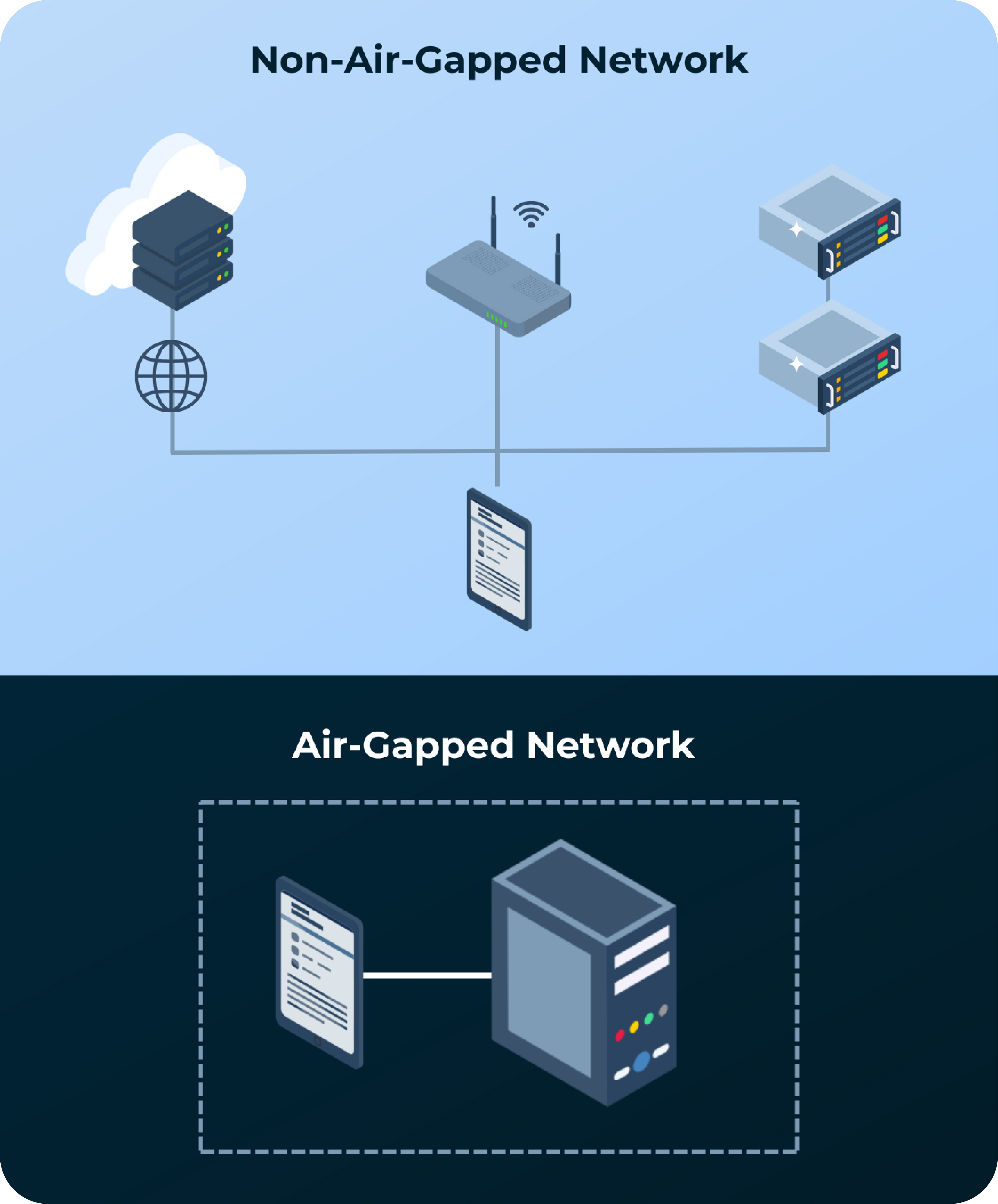
- Fully air-gapped operation, meaning no connection to the public internet
- Complete data containment, where information cannot leak to external systems or platforms
By operating entirely internet-free and air-gapped, Secured ensures that incident data, communication and documentation remain within the defined environment — where they belong.
This approach supports collaboration under pressure, without expanding the attack surface or creating uncontrolled data flows.
Resilience is designed before incidents happen
Reading MSC 2026 through a construction and infrastructure lens leads to a clear conclusion. Resilience is not something you activate during a crisis. It is designed into how people collaborate every day.
It lives in:
- clear task division
- structured incident handling
- collaboration without over-exposure
- and accountability that can be demonstrated afterwards
For those building and operating critical infrastructure, security is no longer something external to their work. It is embedded within it.
And organizations that design their collaboration with these principles in mind are better prepared — not because they react faster, but because they remain in control when it matters most.